ABM for SaaS Companies in 2026: How to Target the Accounts That Actually Close
ABM is no longer an experiment for SaaS companies. 76% of enterprise B2B organizations now run formal ABM programs in 2026, up from 54% in 2024. The shift happened because the SaaS market became too crowded for broad-reach demand generation to work. When every buyer gets 50 outreach messages a week, the ones who close are the ones you reached with the right message at exactly the right moment.
ABM for SaaS generates 2.6x more pipeline per marketing dollar than broad-reach demand gen, and companies using it see 41% higher win rates and 33% larger average deal sizes. This is not a marginal improvement. It is a different way of building pipeline.
Why ABM Is the SaaS Pipeline Model in 2026
The SaaS market has a volume problem. Hundreds of tools compete for the same buyers. Buyers are overwhelmed, inbox filters are aggressive, and the average cold email reply rate has dropped to 3.43%. Broad-reach demand generation, the approach of reaching as many companies as possible with a single message, produces diminishing returns in this environment.
ABM solves the volume problem by concentrating resources on the accounts most likely to close. Instead of trying to reach 10,000 companies, you identify 150 to 300 high-fit accounts and run a coordinated, multi-channel motion across each one. The math changes completely: higher conversion rates, larger deals, and faster cycles because every touchpoint is relevant to that specific account.
61% of companies report that ABM increases pipeline opportunities, quality, or both. The quality improvement is the one that matters most for SaaS companies with longer sales cycles and higher contract values.
When I sold technology to trucking companies, I learned this the hard way. The most practical buyers on earth. If the value is not obvious in one sentence, the conversation is over. ABM forces that discipline on you. You cannot hide behind volume. You have to know exactly who you are talking to and exactly why it matters to them.
What Modern SaaS ABM Actually Looks Like
Modern SaaS ABM is not a list and a sequence. It is a coordinated program across sales, marketing, and events that touches target accounts in multiple places with messages specific to their situation.
The three components that matter are: an account selection process that identifies companies with genuine ICP fit, not just job titles in a database; personalization at the account and persona level, meaning the CMO at a Series B fintech company sees different content than the VP of Engineering at a Series C developer tools company; and an activation touchpoint that creates a meaningful interaction with key contacts at each account.
Personalized content is the top ABM ROI tactic, cited by 47% of respondents in 2026 benchmark data. This is not about adding a first name to an email. It is about creating content that is specific to the buyer's industry, company stage, tech stack, and the problem they are most likely facing right now.
I ran a management school called Ducere where I sold to both students and universities at the same time. Two avatars, one product, completely different messages. The lesson stuck: generic positioning is a tax you pay on every conversation. When you get specific, the conversation changes instantly.
How to Identify Which SaaS Accounts to Target
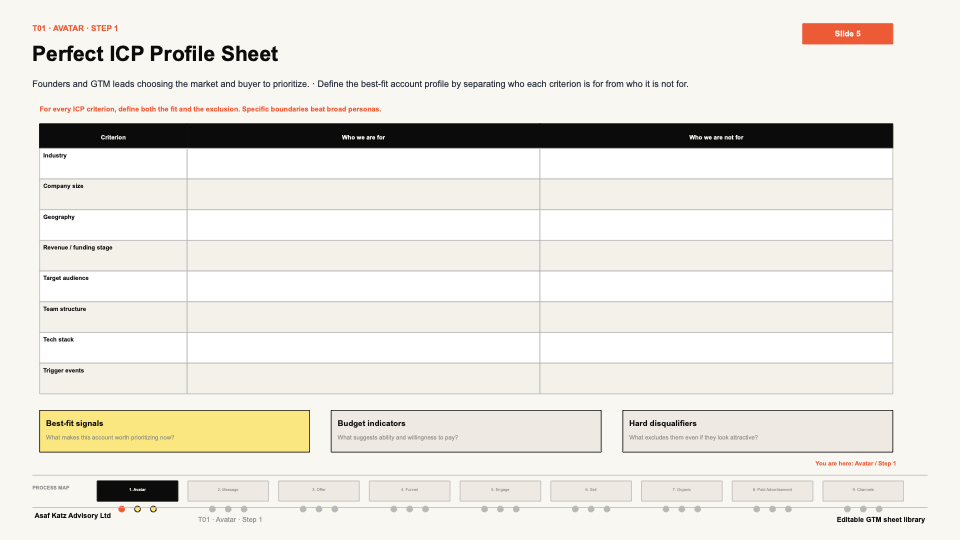
Account selection is where ABM wins or loses. The criteria that consistently predict conversion for SaaS companies are ICP fit on firmographics (company size, industry, revenue stage), technographic signals (they use complementary tools or are migrating off a competitor), hiring signals (they are building the team that will use your product), and intent data (they have been researching your category on review sites and content platforms).
The best target account lists combine all four signals, not just firmographic fit. A company that matches your ICP profile but is not in-market is much harder to convert than a slightly imperfect fit that is actively hiring, migrating platforms, and reading category content. Timing is almost as important as fit.
One practical method I have used: harvest engaged profiles from posts your buyers are already interacting with. Across 45 posts from key influencers in one target market, we pulled 1,175 engaged profiles and opened 116 conversations at a 45.2% connection acceptance rate. The outreach worked because it was tied to something those buyers already cared about. That is account selection done with behavioral signal, not just a spreadsheet.
AI is improving account selection materially. 29% of ABM practitioners cite AI-powered content personalization at scale as their top AI use case in 2026. The underlying capability, identifying which accounts are in-market before they raise their hand, is what makes ABM programs more efficient year over year. One warning: AI amplifies whatever is already there, including broken foundations. Get your ICP tight before you scale anything.
Using Events as the ABM Activation Touchpoint
The most effective ABM activation touchpoint for SaaS in 2026 is the event. Not a trade show booth, but a focused, targeted event where your ICP buyers learn something genuinely useful and self-select by attending.
I have seen this play out directly. One AI-regulation webinar pulled 754 signups in 26 days, with 100+ from target accounts, zero ad spend, and generated $180K in pipeline. The multiplier was topic selection: a subject buyers already wanted to discuss, with a voice they already trusted. The event was built around what the ICP was worried about, not what the company wanted to announce.
The reason events work as an ABM activation is that attendance is the strongest possible buying signal short of a discovery call. An account that registers and sits through a 60-minute session on a specific topic is telling you exactly what they care about and that they are willing to invest time to learn more. That is the warmest lead you can generate without inbound.
There is a measurement point worth naming here: across hundreds of campaigns I have run, event invites get accepted 40 to 50 percent of the time. Pitch outreach to the same lists gets 5 to 10 percent. Same lists, same senders. The ask is the only variable. ABM that activates through events is not a soft play. It is a conversion rate decision.
The ABM Measurement Framework for SaaS
The most common mistake in SaaS ABM is measuring it like demand generation. If you measure ABM by the number of leads generated, you will always be disappointed. The right metrics are: pipeline created in target accounts (not total pipeline), account penetration rate (what percentage of your target list has engaged in some meaningful way), multi-contact coverage (are you reaching two to three buyers at each account, not just one), and account progression rate (accounts moving from cold to engaged to opportunity).
ABM timelines are predictable: early engagement signals in 3 to 6 months, pipeline impact in 6 to 12 months, revenue impact in 9 to 18 months. If you measure ABM at 90 days and see nothing, you are measuring too early. If your account selection and activation are working, you will see engagement signals within the first quarter even if no pipeline has opened yet.
From my own work: when we rebuilt Kovrr's enterprise story around the buyer's problem first, they closed 9 enterprise deals in one quarter. They had needed 4 to hit their fundraising quota. Their CEO moved almost their entire lead generation to that process. The foundation was the variable that changed the outcome. Not the volume of outreach, not the tool stack. The foundation.
The Event-Led ABM Motion for SaaS
The event-led ABM motion I use is a specific implementation designed for SaaS companies that want to reach target accounts without cold outreach. The motion: identify what your ICP buyers are actively worried about, build a live event around that topic with a credible speaker, invite target accounts personally rather than via mass email, follow up with the most engaged attendees within 48 hours.
The result is pipeline that feels warm because it is. Every conversation begins with a shared context from the event. The buyer knows who you are, what you stand for, and has already received value before the sales conversation starts. That changes the entire dynamic of the first call.
I have run recurring event series producing 300 to 800 registrations per event. My own live show, Risk Takers, draws 460 to 577 live senior attendees per episode, built from zero. The pattern is consistent: topic selection and trusted speaker matter far more than production value or ad budget.
SaaS companies using this motion see pipeline from target accounts open two to four times faster than cold ABM approaches because the event collapses the awareness and trust-building phases into a single touchpoint.
What to Do Next
ABM works when the account list is right, the activation is genuine, and the follow-up is fast and personalized. The most common failure is running ABM with a broad account list, a generic event, and slow follow-up. All three of those things undermine the model.
Before you scale any of it, check your foundation. The real stage of your program is the lowest true row of product, pipeline, and proof. AI and events and sequences all amplify what exists. If the ICP is fuzzy or the message is generic, more volume makes the problem worse, not better.
If you are a SaaS company ready to build a real ABM motion around events and target account activation, the first step is confirming whether your ICP is specific enough and whether you have a topic that would genuinely bring 100+ of them into a room.
Take the free 60-second check