ABM for fintech companies works when you stop treating financial services accounts like SaaS accounts. Fintech buyers, CFOs at regional banks, Chief Risk Officers at payment processors, compliance leads at neobanks, move slowly, verify everything, and need multiple credibility touchpoints before any vendor conversation begins. The ABM motions that generate pipeline combine precise account targeting with educational live events that give buyers a reason to engage without feeling sold to.
Why is fintech ABM harder than standard SaaS ABM?
Account-based marketing in fintech shares the mechanics of SaaS ABM but requires a fundamentally different approach to buyer psychology. Financial services buyers operate under regulatory scrutiny, career risk, and intense vendor fatigue. A CFO at a regional bank, a Chief Risk Officer at a payments company, or a compliance lead at a neobank has seen every vendor deck and heard every pitch.
Standard SaaS ABM tactics, personalized email sequences, LinkedIn retargeting ads, web visit alerts, underperform with regulated enterprise buyers. Fintech buying cycles run 6 to 18 months. A compliance officer at an FDIC-insured bank faces a procurement process that may require board approval, vendor risk assessment, and legal review before a contract can be signed. You need touchpoints that build trust over time, not just trigger buying intent.
When I sold into pharmaceutical companies years ago, the lesson was the same: sell into the process or die of old age. Fintech is the same creature. The committee exists. The compliance review is real. Your job is to become the trusted voice before that process starts, not to shortcut it.
How do you build the right ABM account list for fintech?
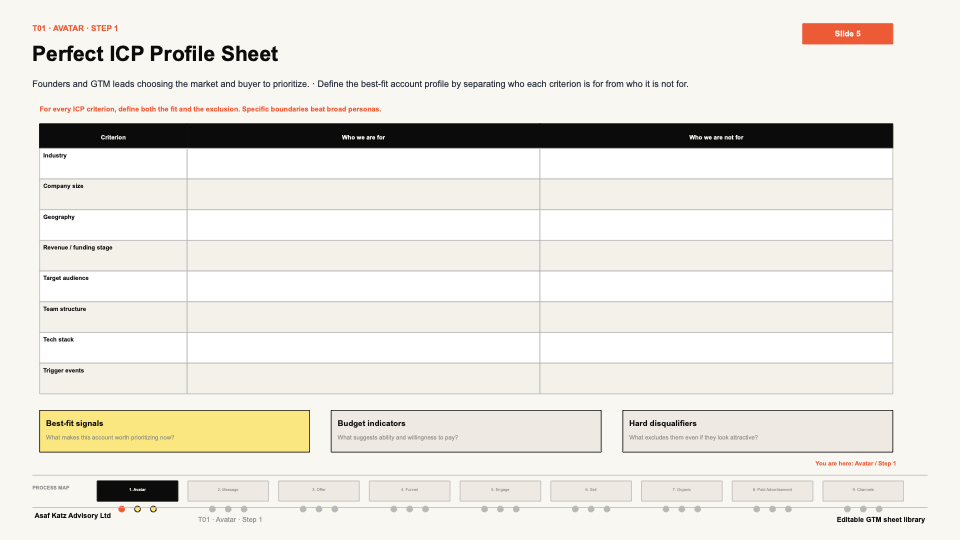
A fintech ABM account list built on "financial services companies with 500 to 5,000 employees" generates noise, not pipeline. The precision that matters:
- Institution type. Community banks, regional banks, credit unions, insurance carriers, payment processors, and neobanks each have different regulatory pressures, buying dynamics, and budget cycles.
- Technology stack. Institutions on specific core banking platforms (FIS, Jack Henry, Temenos) have different tech compatibility requirements and vendor communities.
- Regulatory category. FDIC-insured depositories, registered broker-dealers, and money service businesses face different compliance frameworks and purchasing priorities.
- Firmographic filters. Asset size, transaction volume, and headcount in technology and compliance further refine the list.
Tools like Apollo, LinkedIn Sales Navigator, and Clay help build and enrich this list. Intent data from ZoomInfo or Bombora can surface accounts in active evaluation cycles for your category.
One thing I have learned across 40+ positioning engagements: most companies skip this precision step and wonder why their ABM produces meetings but no pipeline. The account list is a strategic asset. Treat it that way.
Which ABM channels work for fintech companies in 2026?
Live events on regulatory and operational topics. This is the strongest channel for fintech ABM in 2026. A live event on instant payments readiness, DORA compliance, or AI governance in financial services brings your target accounts to you voluntarily. When you track which contacts from named accounts attended, you have a precise, high-intent signal to act on.
From my own work: one AI-regulation webinar pulled 754 signups in 26 days, with 100+ from named target accounts, zero ad spend, and generated $180K in pipeline. The reason it worked was topic selection. We picked a subject buyers already wanted to discuss, with a voice they already trusted. That is the fintech event formula. Not a product demo dressed up as a webinar. A genuine conversation about something they are already losing sleep over.
Across hundreds of campaigns I have run, event invites get accepted 40 to 50 percent of the time. Pitch outreach to the same lists gets 5 to 10 percent. Same contacts, same senders. The ask is the only variable.
Direct mail and high-touch outreach. Still effective in financial services where digital noise is high and physical mail stands out. A well-designed, professionally delivered briefing document to ten named accounts can open doors that email cannot.
Executive briefings. Private CXO roundtables or executive briefings, virtual or in-person, give you extended time with decision-makers in a non-selling context. These require significant setup but produce the highest-quality conversations.
Content sequencing. A well-timed sequence of genuinely useful content, a regulatory brief, a peer institution case study, an event invitation, works if you maintain relevance throughout and avoid turning it into a sales cadence.
How does LinkedIn fit into a fintech ABM strategy?
LinkedIn is the primary channel for building passive awareness with financial services buyers before your ABM sequence lands. A CFO or CRO at a regional bank who has seen your thought leadership on DORA compliance or instant payments multiple times before your event invitation arrives reads it differently than a cold name on a list.
Tactical LinkedIn approach for fintech ABM: post 2 to 3 times per week on topics your ICP is actively navigating, engage with conversations your ABM targets are already having rather than just broadcasting, and use LinkedIn InMails only after a target has seen your content organically. Cold LinkedIn outreach to regulated financial buyers follows the same declining trajectory as cold email.
I have also seen the engagement-led version work well. We tracked posts that buyers' trusted voices were writing, harvested engaged profiles from those posts, and opened conversations tied to something those contacts already cared about. For one campaign we opened 116 conversations at a 45.2% connection acceptance rate. That is the opposite of blasting a list.
What does fintech ABM follow-up look like?
The follow-up after a fintech ABM event is where most programs leave qualified pipeline on the table. Attendees from named accounts are your warmest contacts. They registered, showed up, engaged in Q&A, and spent 60 minutes with your content. That is more intent than any form fill or web visit.
The follow-up that converts fintech buyers: reach out within 48 hours, reference something specific from the event content, and offer a relevant next step. Do not open with a product demo request. For fintech buyers, the natural next step is a brief peer conversation, a deeper briefing on the compliance topic they engaged with, or an introduction to a relevant practitioner contact.
I watched an eCommerce logistics founder get so many warm replies from a humble, no-pitch follow-up campaign that he asked us to pause it because he could not handle the volume. The best early-stage sell is often not selling. That applies directly to fintech ABM follow-up.
What results does this kind of fintech ABM actually produce?
Done well, ABM-style live events targeting specific financial institutions and the right personas from those accounts produce numbers that cold outbound cannot match. From programs I have run directly or built:
- 754 webinar signups in 26 days, 100+ from named target accounts
- 43 qualified meetings in 60 days for a single client
- 38 C-level meetings booked from 1,266 prospects at a single conference, using 12-word openers and role-matched senders
- 460 to 577 live senior attendees per episode on my own event series, built from zero
When a CFO from a target bank attends your event on instant payments readiness, the follow-up is not a cold call. It is a warm, relevant conversation with verified interest from someone who chose to spend time with you.
How do fintech companies measure ABM success?
The metrics that matter for fintech ABM are not impressions, email opens, or MQL volume. They are: percentage of named accounts with a contact who attended at least one event in the last 90 days, qualified meetings booked from event attendees within 30 days of attendance, and pipeline stage conversion rates from event-sourced opportunities versus cold-outbound-sourced opportunities.
Fintech ABM programs that track these three numbers consistently outperform programs that measure activity instead of engagement quality. Activity is easy to generate. Engagement from the right people at the right accounts is what closes.
One more thing. If your foundation is weak, ABM will not save you. By foundation I mean clear ICP, a message that reflects actual buyer pain, and an offer that is easy to say yes to. I have seen companies invest in ABM infrastructure before any of that existed. The result is a very expensive way to discover that buyers do not understand what you do. Fix the foundation first. Then point ABM at it.