Why DevOps Demand Generation Is Different From Standard B2B
DevOps buyers have a well-earned reputation for ignoring vendor marketing. A Platform Engineer who has spent years dealing with bad tooling decisions made by people who did not understand the stack is not going to respond to a cold email promising to "transform your CI/CD pipeline." The trust barrier in DevOps is higher than in almost any other B2B vertical.
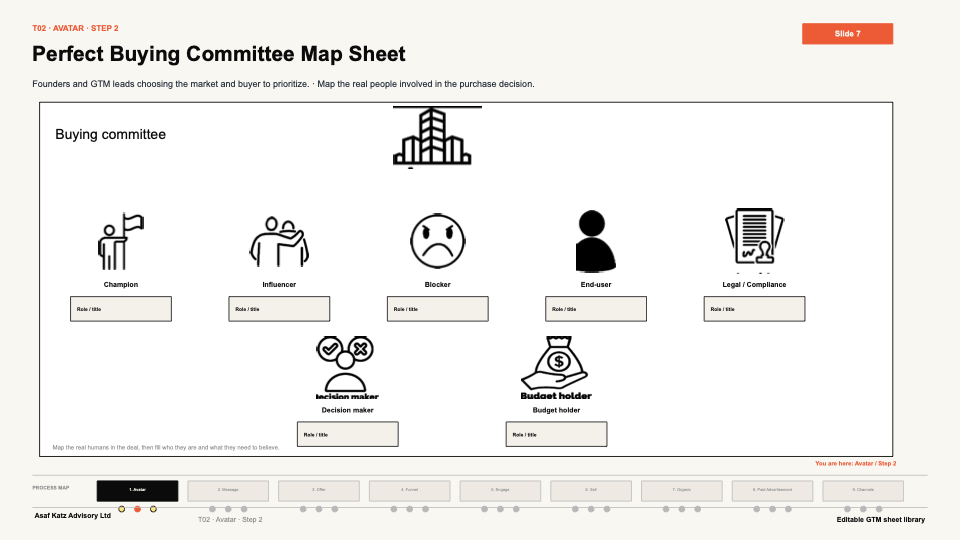
Buying decisions in DevOps are made by committee, typically with 8 to 12 stakeholders. The CISO has security requirements. The VP of Engineering owns the budget. The Platform Engineers and SREs will use the tool daily and have veto power. The CTO cares about architectural fit. A demand gen motion that reaches only one of these personas and fails to build credibility with the others will stall at procurement.
Add long evaluation cycles, proof-of-concept requirements, and a strong preference for peer recommendations over vendor claims, and you have a demand gen environment that breaks most standard playbooks.
I learned this early. When I sold technology to trucking companies, I had one sentence to make the value obvious or the conversation was over. DevOps buyers are the same, except they also check whether you understand their stack before they decide if that sentence is credible.
What Does the DevOps Buyer Actually Trust?
DevOps buyers trust practitioners, not marketers. They trust someone who has debugged a Kubernetes incident at 2am, not someone who has read about Kubernetes. They trust peer recommendations from engineers at companies they respect. They trust conference talks, community forums, open source contributions, and practitioner-written content that demonstrates actual technical depth.
The implication for demand gen is direct. If your webinar speaker is a VP of Marketing reading from slides, DevOps buyers will leave within 10 minutes. If your speaker is a Staff Engineer from a company they recognize talking through a real architectural decision, they will stay for the entire session and ask questions.
This is why speaker sourcing and practitioner network matter more for DevOps demand gen than for almost any other vertical. The content of the event determines whether your ICP shows up at all.
What Agency Types Serve DevOps Companies in 2026?
Four agency categories are operating in DevOps demand gen, each with different strengths and different fit depending on your motion and budget.
Event-led demand generation agencies host practitioner-focused webinars and invite target accounts as guests. For DevOps companies, this model works best when the speaker roster includes genuine practitioners: SREs, Platform Engineers, or DevSecOps leads who have solved real problems with the kind of tools your company offers. Events that attract the right ICP create self-qualified buyers who attend because the content is valuable, not because they received a pitch.
From my own work: one AI-regulation webinar pulled 754 signups in 26 days, over 100 from target accounts, zero ad spend. The variable that made it work was topic selection. Buyers already wanted to discuss that subject with a voice they already trusted. DevOps events follow the same logic. A focused session on reducing MTTR in distributed Kubernetes environments, with a speaker who has actually done that, will pull a harder audience than any generic "DevOps trends" panel. Across recurring event series I have run, registration consistently lands between 300 and 800 per event when the topic and speaker match the ICP.
ABM-focused agencies operate well in DevOps when the target account list is clearly defined and the personalization is technically credible. DevOps ABM requires stack-specific intelligence: knowing that a target account runs on AWS and uses Terraform is the baseline for personalization that does not get ignored. Agencies that execute DevOps ABM without this technical context produce outreach that signals immediately that the sender does not understand the buyer.
For DevOps companies, the total addressable account list is often 100 to 300 companies. ABM precision at that scale can generate meaningful pipeline without volume. The challenge is finding agencies that can execute technical personalization at depth rather than just account-level messaging.
Content and developer community agencies create practitioner-grade technical content, manage developer relations programs, and build presence in the communities where DevOps buyers spend their time: GitHub, Stack Overflow, internal Slack communities, practitioner Substacks, and technical conferences. These agencies are strongest as a long-term authority-building complement to an event or ABM motion. On their own, they generate awareness without consistent pipeline.
SDR-as-a-service agencies face the steepest uphill in DevOps. Technical buyers are the least responsive segment to cold outreach, and DevOps practitioners in particular have developed strong filters against vendor outreach. With average cold email reply rates at 3.43% in 2026 and DevOps buyers more skeptical than average, volume-based cold outreach produces almost no qualified pipeline in this vertical without an unusual combination of offer, timing, and targeting. I have run campaigns at RSA with 12-word openers and role-matched senders that produced 38 C-level meetings from 1,266 prospects. Even that required surgical precision. Spray-and-pray is dead with this audience.
One more note on sequencing: no agency can fix a broken foundation. If your ICP is vague, your message is generic, or your offer is unclear, adding demand gen spend will just amplify the problem. Get the foundation right before you scale anything.
What Results Should a DevOps Company Expect?
For event-led demand gen with the right ICP topic and speaker roster, 460 to 577 live attendees per event is achievable for DevOps audiences. The key variable is topic specificity. A generic "DevOps trends" webinar will underperform relative to a focused session on, say, "reducing MTTR in distributed Kubernetes environments" with a speaker who has done exactly that.
Event-led programs done well have produced 754 webinar signups in 26 days with 100+ from target accounts, and 43 qualified meetings in 60 days from follow-up. For DevOps companies where qualified meetings are scarce because buyers resist outreach, concentrating your pipeline through event-generated follow-up produces a fundamentally different quality of meeting than cold-booked alternatives.
It also matters how you follow up. Across hundreds of campaigns, event invites get accepted 40 to 50 percent of the time. Pitch outreach to the same list gets 5 to 10 percent. The ask is the variable. Post-event follow-up that references the shared session lands closer to the invite end of that range than the pitch end.
For ABM programs: at 100 to 300 target accounts with strong technical personalization, moving 15 to 25 percent of target accounts into active pipeline conversations per quarter is a realistic benchmark. Below 10 percent suggests the personalization or the messaging is not landing with technical buyers.
What Does the Evaluation Checklist Look Like?
Before selecting a demand gen agency for your DevOps company, work through these criteria.
Technical knowledge of DevOps buyer personas. Can the agency accurately distinguish between a DevSecOps lead and a Platform Engineer? Do they understand what an SRE cares about that a VP of Engineering does not? Ask them to describe your buyer's day-to-day concerns without you prompting. If they cannot, they will build your events and campaigns around the wrong assumptions.
Speaker and practitioner network. For events, ask specifically: who would they source as speakers for a session targeting Platform Engineers? Can they reach practitioners at companies your ICP recognizes? A strong practitioner network is a real competitive asset for any agency working in technically skeptical verticals.
ABM capability with technical personalization. Does the agency understand stack-specific targeting? Can they personalize outreach based on the technologies your target accounts use, not just their company size and revenue?
Reporting and pipeline attribution. Are they tracking meetings that convert to pipeline, or MQL volume? In DevOps, where every qualified conversation matters, vanity metrics are a warning sign. Ask to see what their reporting looked like 90 days into a comparable engagement.
Incentive alignment. Does pricing include a performance component? Agencies whose entire fee is a fixed retainer regardless of results have weak incentives to optimize for pipeline rather than activity.
I will add one thing from experience: ask them what happens when a campaign is not working. My agency went from 20 clients to zero because I kept selling execution when clients needed foundation. The agencies that diagnose honestly, even when the diagnosis is uncomfortable, are the ones worth hiring.
Why the Event-Led Motion Works Best for DevOps in 2026
The DevOps buyer's trust deficit is the central problem of demand gen in this vertical. No cold email can solve it. No automated LinkedIn sequence can solve it. What solves it is demonstrating technical credibility in a format where the buyer can evaluate you on their own terms.
A practitioner webinar does exactly that. The buyer attends an event with a speaker they respect, on a topic they care about, produced by a company that clearly understands their world. When follow-up arrives 48 to 72 hours later referencing that shared experience, it lands as relevant rather than intrusive. The meeting it generates starts from a completely different place than a cold-booked meeting.
The done-for-you event-led motion handles the full process: identifying what your specific DevOps ICP cares about, sourcing practitioner speakers, building the invite strategy to reach target accounts, producing the event, and executing the follow-up that turns attendees into qualified meetings. The client takes the meetings. Events start from $6,000.
For DevOps companies whose buyers are skeptical of every marketing channel except peer recommendation, the event-led motion creates the peer-like credibility that makes buyers willing to have the conversation.
Take the free 60-second check