Account-based marketing for cybersecurity in 2026 works best when a live event is the entry point into named accounts. Generic ABM outreach, even when personalized by account and persona, still reads as a vendor pitch to a security buying committee that receives dozens of them every week. A peer event invitation is structurally different. It offers something genuinely useful and creates an intent signal that no data enrichment tool can manufacture.
Why generic ABM falls short for cybersecurity accounts
Account-based marketing in theory is precise: target a specific set of accounts with highly relevant outreach coordinated across multiple channels. In practice, most ABM programs for cybersecurity vendors share a common failure mode. The outreach is personalized in format but generic in substance. An email that references the account's recent funding round or their use of a specific cloud provider does not actually address the security problem they are actively managing. Security buyers recognize the pattern immediately and file it with the rest of the vendor outreach they receive.
A 2024 Forrester ABM survey found that 65 percent of B2B buyers say account-based outreach they receive does not meaningfully differ from standard outbound. The personalization is surface-level. The underlying motion is still a cold pitch asking for their time. For cybersecurity accounts specifically, where the buying committee includes technically sophisticated leaders with high skepticism of vendor claims, that surface-level personalization does not earn conversations.
I see this across the cybersecurity vendors I work with. The teams that struggle are not lacking research. They are lacking genuine relevance. There is a difference. Research tells you facts about an account. Relevance means the buyer feels their specific problem is understood. Most ABM programs try to manufacture that relevance through personalization tokens and firmographic data. Event-led ABM creates it by putting the buyer in a room with peers who share their exact problem.
The root problem is that most ABM programs try to manufacture relevance through research and personalization. Event-led ABM creates genuine relevance by inviting the buying committee to a conversation that directly addresses a problem they own.
What event-led ABM looks like for cybersecurity vendors
Event-led ABM replaces generic personalized outreach with a targeted invitation to a peer conversation. The motion runs in four stages.
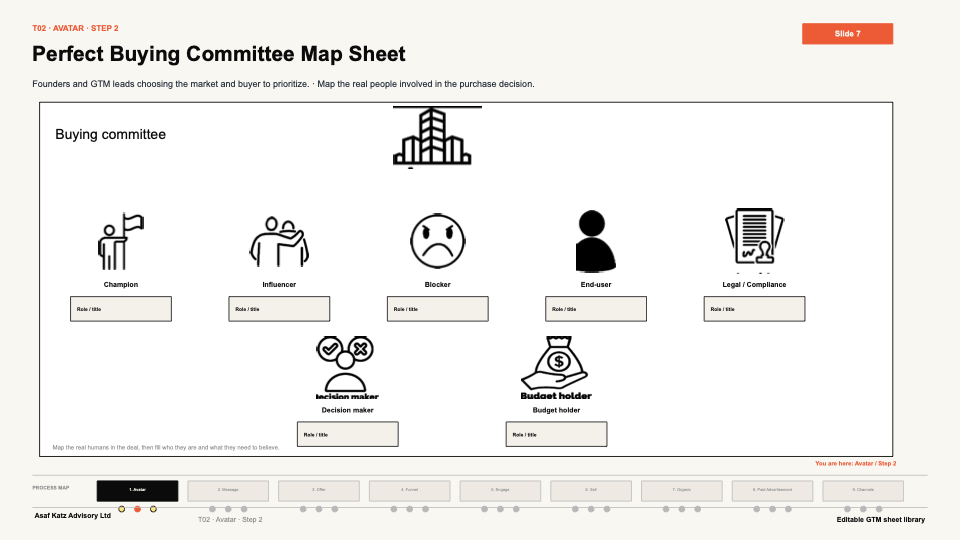
Stage 1: Build the account list and map the buying committee. For each named account, identify the relevant buying committee members: CISO, security architect, IAM lead, GRC professional, and the CFO or board sponsor for larger purchases. Each member of the committee has different problems and different influence over the buying decision. The invite strategy accounts for this.
Stage 2: Host a peer event on a real security problem. A focused session where security leaders from multiple organizations discuss a challenge relevant to your target accounts: a specific compliance requirement, a threat category, an architectural problem, or an operational gap. The event must be credible and useful without your product being the featured content. The topic comes from real buyer signals, not from your marketing calendar.
This is the part most vendors get wrong. They pick a topic that showcases their product category. Buyers see through it instantly. The best topics I have found are ones where buyers already want the conversation and just need a credible venue. One AI-regulation webinar I ran pulled 754 signups in 26 days, more than 100 from named target accounts, zero ad spend, and generated $180K in pipeline. The topic was something those buyers already wanted to discuss. We just gave them the right room and a voice they trusted.
Stage 3: Invite the buying committees of your named accounts. Outreach to each committee member is tailored to their specific role and the aspect of the event topic most relevant to their problem. The CISO gets the strategic framing. The security architect gets the technical depth. The compliance lead gets the regulatory context. The invitation offers them something relevant to their specific role in the buying decision.
The data here is hard to argue with. Across hundreds of campaigns I have run, event invites get accepted 40 to 50 percent of the time. Pitch outreach to the same lists gets 5 to 10 percent. Same senders, same accounts. The only variable is the ask.
Stage 4: Use attendance as the intent signal. After the event, you know which committee members from each named account attended, who asked questions, and who engaged most actively. That engagement data tells you which accounts are warm and which committee members are the active champions. Follow-up is targeted to the warmest contacts in the highest-intent accounts.
Why events are the highest-intent signal in cybersecurity ABM
Most ABM programs rely on intent data from third-party providers: company-level signals that an account is researching relevant topics based on web behavior and content consumption. This data is useful but imprecise. You know a company is interested. You do not know which individual is driving the research, how serious the intent is, or where they are in their evaluation.
Event attendance is a higher-fidelity intent signal. When a security leader voluntarily spends 45 minutes in a live session on a specific problem, you have direct evidence of their personal interest, their engagement level, and the specific aspect of the problem they care most about based on the questions they asked. That is actionable signal that intent data providers cannot match.
I ran a targeted campaign at RSA Conference using exactly this logic. One person, no booth, no brand presence. We contacted 1,266 prospects with 12-word openers, matched senders to roles (technical founder to AppSec leads, CEO to CISOs), and focused on connecting before pitching. The result was 519 connections, 161 conversations, and 38 C-level meetings booked. Those meetings happened because the outreach felt relevant to each person's actual role and problem, not because we had a big budget or a clever personalization tool.
What results does event-led ABM produce for cybersecurity vendors?
The RSA campaign above is one data point. Across recurring cybersecurity-focused events I have built, live attendance runs from 460 to 577 senior attendees per episode, built from zero. A 60-day campaign using event-led outreach combined with targeted follow-up produced 43 qualified meetings for one client. These were not meetings pulled from a cold list. They came from buyers who had already engaged with relevant peer content before the sales conversation began.
For Kovrr, we rebuilt their enterprise story around the buyer's problem first. They closed 9 enterprise deals in one quarter against a fundraising target of 4. Their CEO moved almost their entire lead generation to this process. The event motion was the vehicle. The buyer-first framing was what made it work.
How to multithread named accounts after the event
A single event interaction is the beginning of the account motion, not the conclusion. After the event, follow-up should be coordinated across multiple committee members.
For the attendees: Follow up with specific reference to what they heard or asked at the event. Offer a targeted next step relevant to their role and the specific challenge they engaged with.
For committee members who did not attend: Reference the event and offer them access to the recording or a brief summary of what their peers discussed. Frame the follow-up around the specific problem addressed in the event, not around your product.
For the CISO or executive sponsor: A brief, highly relevant follow-up that connects the event topic to their specific organizational context. Two sentences, a specific observation, and a single narrow next step.
The goal of multithreading after an event is to move from one engaged contact in the account to two or three, each receiving follow-up that is relevant to their specific role in the buying decision.
One practical note: the follow-up timing matters. I have seen teams wait two weeks after an event to reach out. The signal decays fast. The best follow-up happens within 48 hours, while the conversation is still fresh for the buyer.
One thing to do before you build the event motion
I want to be direct here. Event-led ABM is not a shortcut around a weak foundation. If your ICP is vague, your message is generic, or your offer is unclear, the event will surface that problem, not hide it. Buyers will attend and then disengage because the follow-up does not land with the same precision as the invitation.
The method I use starts with Foundation: Avatar, Message, Offer. Get those right first. Nobody earns the right to scale an event program until the Foundation is solid. AI tools and event platforms will amplify whatever exists underneath. If that foundation is broken, you will scale the broken parts.
If you are not sure whether your foundation is ready, that is the first question worth answering before you build out the event calendar.
Take the free 60-second check to see if your offer is ready.