The Martal Alternative: Event-Led Pipeline (2026)
The strongest Martal alternative in 2026 is event-led pipeline. Rather than paying an outsourced SDR retainer to work a cold list, LinkedOtter hosts live events your buyers actively want to attend, then books meetings with the warmest people in the room. Qualified conversations, run end to end for you.
What is Martal, and why do teams search for an alternative?
Martal Group is an outsourced SDR and fractional sales provider. Companies pay a monthly retainer for a team of reps who run multichannel outbound on their behalf. The pitch makes sense on paper: skip recruiting overhead, get a team running fast, and hand off the function most revenue leaders find tedious.
The structural problem surfaces after one or two quarters. Outsourced SDRs work from cold lists. The model depends on volume, scripted sequences, and relentless follow-up. When your offer is weak, or when the market is saturated with outbound, more dials produce more ignored messages. Senior buyers, the ones with real budget authority, have built strong filters specifically against this type of contact.
I tracked this pattern across my own agency before I had the language to explain it. We were running sequences for clients, hitting send on thousands of messages, and watching reply rates compress quarter over quarter. The market did not get worse. The signal-to-noise ratio did. Buyers learned to ignore what looked like outbound, and our open rates paid the price.
A 2024 Forrester study found that 64 percent of B2B buyers now complete the majority of their research before any vendor outreach reaches them. Those buyers are choosing the conversations they join. An invitation to something genuinely useful gets through where a pitch does not.
How does the event-led motion work?
The motion has five steps, all handled for you.
Step 1: Listen. Buyers signal what matters constantly, in LinkedIn threads, conference panels, community discussions, and the objections that end past deals. The event topic comes from those signals, not from internal brainstorming.
Step 2: Host a focused live event. A 45-to-60-minute session built around the exact problem buyers are wrestling with. It can be a roundtable, a panel, a workshop, or a keynote with open Q and A. The event must be genuinely useful independent of your product.
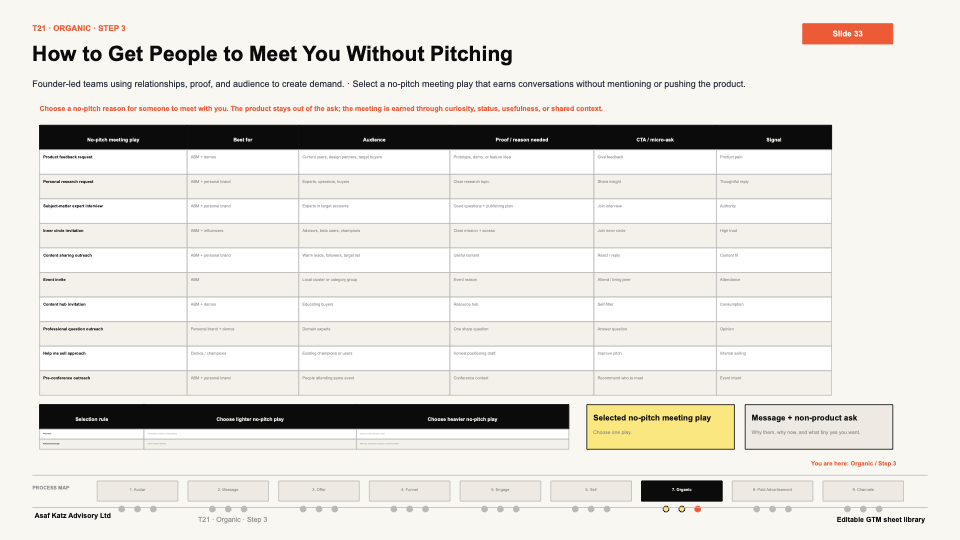
Step 3: Invite the right people. An invitation offering something worth 45 minutes gets a structurally different response than a pitch asking for a meeting. You are not asking buyers to evaluate you; you are offering them something for themselves. Across hundreds of campaigns I have run, event invites get accepted 40 to 50 percent of the time. Pitch outreach to the same lists gets 5 to 10. Same senders, same prospects. The ask is the only variable.
Step 4: Run the event. A well-run live room creates peer conversation and group trust. Attendees hear from each other and from a credible host. That trust forms faster in a group setting than any individual sequence can build it.
Step 5: Follow up with the warmest attendees. After the event you know exactly who registered, who attended, who asked questions, who stayed until the end, and who engaged in chat. Those signals reveal who is warm. You reach out to those people specifically, and the first message starts from genuine shared context.
What results does event-led pipeline actually produce?
One AI-regulation webinar I ran pulled 754 signups in 26 days. More than 100 came from named target accounts. No ads. Zero cold pitch. The multiplier was topic selection: a subject buyers were already trying to navigate, hosted by a voice they already trusted. That single event generated $180K in pipeline.
At RSA Conference, a targeted outreach campaign using the same underlying logic produced 38 C-level meetings booked from 1,266 prospects. One person, no booth, no brand. We used 12-word openers, matched the sender role to the buyer role (technical founder to AppSec leads, CEO to CISOs), and connected before we ever pitched. That conversion rate is not achievable through cold email volume. It requires that the first interaction be something the buyer genuinely values.
My own live show, Risk Takers, draws 460 to 577 senior attendees per episode, built from zero. A separate 60-day effort produced 43 qualified meetings through event-led outreach combined with targeted follow-up.
These numbers reflect a consistent pattern. When buyers show up voluntarily, the downstream meeting quality is qualitatively different from meetings booked through volume-based cold outbound.
How does this compare to what Martal offers?
What Martal gives you: A team of reps running multichannel outbound. You pay for activity, rep capacity, and sequences. Meetings are the downstream output of that activity volume.
What event-led gives you: A room full of buyers who showed up because the topic was relevant to their work, followed by targeted follow-up that books meetings from the most engaged people in that room.
The first interaction is the dividing line. Martal's first touch asks the buyer to give you time. Event-led's first touch offers the buyer something useful. That structural difference shapes every downstream metric.
On pricing: Outsourced SDR retainers at Martal's level typically run $8,000 to $15,000 a month or more. Event-led pipeline with LinkedOtter typically starts around $6,000 per event, with program pricing for ongoing work. You pay for outcomes, not rep seats.
On ramp time: Martal-style programs take 30 to 60 days to ramp as the team learns your ICP and refines messaging. An event can be scoped, promoted, and run within weeks of kickoff.
On meeting quality: Volume models reward activity metrics. Event-led rewards fit. Meetings booked from engaged attendees arrive with higher close rates and require fewer touchpoints to reach a buying decision.
Who is this motion right for?
Event-led pipeline performs best when:
- Buyers are senior and protective of their calendar: CISOs, CFOs, VPs of Engineering, Heads of Compliance, and similar roles.
- The product has a longer sales cycle where trust precedes a vendor conversation.
- Cold outbound is producing diminishing returns on meeting quality.
- The team wants meetings from genuine interest, not just calendar volume.
If you are running a Martal retainer and your closers are sitting through no-shows and poor-fit calls, event-led pipeline is a structural fix, not just a different vendor executing the same motion.
One note on sequencing: before any outbound motion scales, the foundation has to hold. Avatar clarity, a sharp message, an offer that converts. I learned this the hard way. My own agency went from 20 clients to zero because I was selling execution while clients needed foundation. If the foundation is shaky, more volume, whether from outsourced SDRs or event invites, just amplifies the cracks.
What objections come up most often?
We do not have enough content to run events. The content comes from buyer signals, not from your team producing thought leadership in-house. LinkedOtter does the research and shapes the program around what buyers are already discussing.
We tried webinars and they did not convert. Webinars promoted with a single email to a broad list fail routinely. Event-led is different: targeted invites to a curated list on a signal-proven topic, with follow-up built into the motion from day one. I have seen a speaker change, an active war zone, and a forced reschedule all hit the same campaign at once. We used the chaos to add 61 net-new registrants at zero cost and finished with 345 high-intent signups. Topic and trust do more than perfect logistics.
We need meetings faster than an event cycle allows. Events can fill within weeks of kickoff. And unlike a cold sequence, each event compounds the warm audience for the next one, so results improve over time rather than plateauing.
The compounding effect of running events consistently
One event produces a warm list of engaged buyers. Two events produce a repeat audience and referrals. Four events produce a community of buyers who associate your brand with useful conversations rather than vendor pitches.
This compounding effect is what separates ongoing event-led programs from one-off webinars. The asset you build is not a recording. It is a growing list of buyers who have already raised their hand for a conversation on your topic.
That list is yours regardless of what happens to LinkedIn algorithms, ad costs, or cold email deliverability. It is the most durable pipeline asset most B2B teams never build because they keep paying for the next batch of cold contacts instead.
Take the free 60-second check to see if your offer is ready.