Why Are B2B Founders So Hard to Book a Meeting With?
Founders are the final decision-makers for most B2B purchases at companies under 200 people. They are also the person receiving the most unsolicited outreach per day. Every vendor, recruiter, investor, and job seeker wants five minutes with them. The result: most outreach gets filtered instantly, either by an EA, by inbox rules, or by a founder who has learned to recognize a sales sequence at a glance.
The stakes are also different for a founder. A bad vendor decision does not just cost money. It can slow down a product launch, distract the team, or burn through runway. Founders are more skeptical of new vendors than almost any other buyer, because they have less margin for error.
The only outreach that works with founders is outreach that immediately signals you understand their specific situation. Generic is fatal.
What Does a Founder Actually Respond To?
Founders respond to three things: sharp insight that is directly applicable to their business, peer credibility, and unexpected angles they have not heard before.
Sharp insight means you have done your homework. You know their business model, their current growth stage, a specific challenge they are facing, and you have something concrete to say about it. "I noticed your team is expanding into enterprise sales after two years of SMB, here is what typically breaks at that transition" is a message that gets read. "I help companies like yours scale revenue" is not.
Peer credibility means you are introduced by someone they trust, or you are visibly credible in their world. A founder in a vertical-specific community who vouches for you is worth fifty cold emails. A LinkedIn post that demonstrates genuine expertise in their domain earns attention.
Unexpected angles cut through because founders read so much pitching that anything novel gets noticed. A cold outreach that opens with a data point they did not know, a counterintuitive take, or a specific observation about their business stands out.
When I was selling technology to trucking companies, I learned this the hard way. Truckers are some of the most practical buyers on earth. If the value is not obvious in one sentence, the conversation is over. Founders are the same. They are running on compressed time and zero patience for vague.
Signal-Based Outreach: Timing Matters as Much as Targeting
The strongest signal triggers for founder outreach are events that indicate a decision window is open. A new fundraise means they are evaluating what to build or buy with fresh capital. A recent hire in a key function means the team is scaling. A product launch means they need to grow the customer base. A press mention about a new market entry means their GTM motion is changing.
Reaching out within days of a signal is materially different from reaching out cold. The founder is already in problem-solving mode. Your message arrives when they are actively thinking about the problem you solve.
Job posting surges are a particularly strong signal for B2B service providers. If a founder is posting five SDR roles in two weeks, their pipeline problem is urgent. That is the moment to reach out with a specific, relevant offer.
I ran a campaign where we tracked posts that our buyers' influencers wrote, harvested 1,175 engaged profiles from 45 posts, and opened 116 conversations at a 45.2% connection acceptance rate. The outreach worked because it was tied to something the prospect already cared about. The same logic applies to founders. You are not interrupting them. You are joining a conversation they already started in public.
Signal-based outreach for founders requires research, but the research pays off. A message that references a specific signal converts at three to five times the rate of cold outreach to the same person.
The Event Play: Founder Roundtable or Vertical-Specific Event
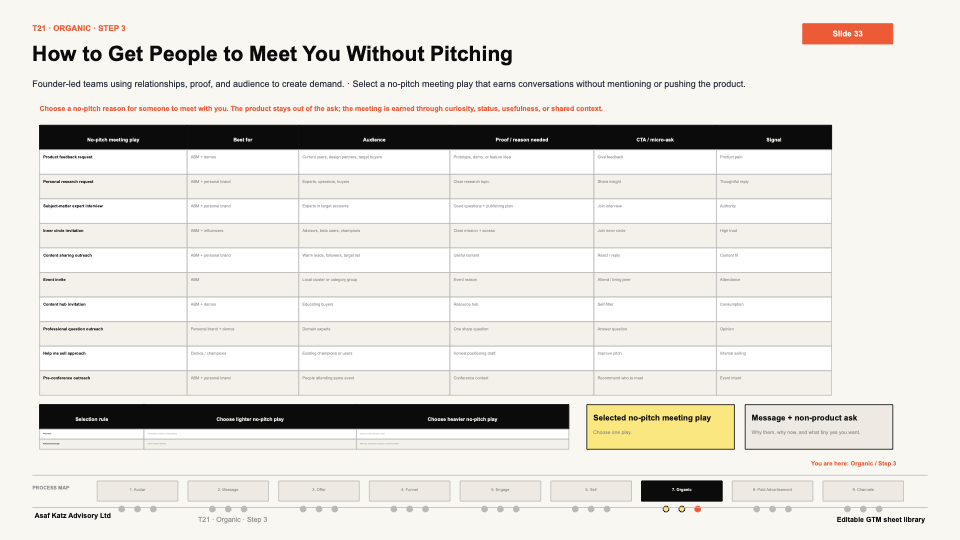
The most effective way to build a conversation with founders is to create an environment where they want to show up. A founder roundtable on a topic that is genuinely relevant to their vertical, such as go-to-market challenges for vertical SaaS companies, scaling revenue without losing product focus, or the event-led pipeline playbook, is something founders attend voluntarily.
The event is not a pitch. It is a peer conversation that the founder chose to join. That changes the dynamic entirely. You are not a vendor interrupting their day. You are the host of a conversation they found valuable.
I have the numbers to back this up. Across hundreds of campaigns, event invites get accepted 40 to 50 percent of the time. Pitch outreach to the same lists, from the same senders, gets 5 to 10 percent. The only variable is the ask. One asks people to give you time. The other gives them something worth showing up for.
My live show, Risk Takers, draws 460 to 577 senior attendees per episode, built from zero. One AI-regulation webinar I ran pulled 754 signups in 26 days, 100 or more from target accounts, no ads, and generated $180K in pipeline. The topic did the work. It was something buyers already wanted to discuss, with a voice they already trusted.
After the event, follow up with the founders who engaged most: those who asked questions, stayed the full session, or interacted in the chat. Your follow-up references something specific from the event. That is a warm conversation, not an outreach sequence.
LinkedIn in 2026: What to Post and How to DM Founders
Founders are among the most active personas on LinkedIn. The 2026 algorithm favors depth over broadcast. Posts that generate substantive comments from relevant professionals outperform posts that chase likes or impressions.
For reaching founders, your LinkedIn strategy should produce content that demonstrates genuine expertise in their domain. A post analyzing a real GTM mistake and what it cost is more useful than a post celebrating a product feature. Founders engage with content that teaches them something or confirms something they suspected.
When a founder engages with your content, you have a warm signal. A DM that references their specific comment is warm outreach, not cold. Keep the message short, reference the conversation already in progress, and suggest a specific next step.
The DM that books a founder meeting is one or two sentences. "Your comment about the enterprise transition resonated. We have seen the same pattern at three other vertical SaaS companies. Worth a quick call?" That is a message that gets replied to.
At RSA, one person with no booth and no brand booked 38 C-level meetings from 1,266 prospects using 12-word openers and role-matched senders. Technical founder to AppSec leads. CEO to CISOs. The result was 519 connections and 161 conversations. Short, specific, and matched to the person on the other end. That principle works on LinkedIn DMs just as well as it works at a conference.
From My Own Work
My own agency went from 20 clients to zero. The diagnosis took a while to land, but it was this: I was selling execution while the real problem my clients had was foundation. They did not need more outreach. They needed a clear ICP, a sharp message, and an offer that made sense before any sequence ran. Once I rebuilt around that order, everything changed. I tell this story because it is the same mistake I see founders make when they try to book meetings. They start with tactics. They build LinkedIn sequences or buy contact lists before they can answer who they are actually targeting and why those people should care. Fix the foundation first. The outreach gets easier.
The Event Play Builds Founder-Level Pipeline Because It Removes the Friction
The event motion solves the three problems at once: the inbox problem, the trust deficit, and the timing problem. A founder who attended your roundtable and asked a question during the session is already a warm lead by any definition. You are not a cold contact anymore. You are the person who ran a conversation they found useful.
Invite to a peer conversation, not a sales call. Let the event be the value. Follow up with something specific. The meeting that results is one the founder chose to have. That changes how it starts and how fast it closes.