This is one of the most common and most honestly uncomfortable questions in B2B revenue: how long does demand generation actually take to work? The honest answer is: it depends entirely on the approach, and most demand gen programs take longer than the team that approved the budget expected.
Understanding why will save you a quarter of wasted expectations and help you pick the approach that matches your actual timeline need.
Demand Gen Timeline by Channel (2026 Reality)
Content marketing and SEO: 6 to 18 months to consistent organic traffic, 12 to 24 months to meaningful pipeline influence. Content is a compounding investment. The first articles rarely rank. The twentieth starts to compound. This is real but slow. In 2026, AI search is compressing some of this timeline for brands that get GEO right. A well-structured article can get cited in AI chatbot responses within weeks of publication.
Paid media (Google, LinkedIn): 60 to 90 days to meaningful data, 3 to 6 months to efficient pipeline. Paid media provides faster feedback but requires budget commitment before the learning phase produces usable optimization data. For B2B, LinkedIn campaign CPL averages $80 to $150 for most audiences. Pipeline quality varies significantly by targeting precision.
Cold outbound (email, LinkedIn, phone): 30 to 90 days to first qualified meetings, but with low conversion rates. In 2026, reply rates on cold outbound sit around 1 to 5 percent. Volume outbound can produce early meetings but at low efficiency. The quality problem, meetings with contacts who are not actually in a buying window, usually surfaces after the first 90 days.
Webinars and event-led pipeline: 30 to 60 days to first qualified meetings when done with account-based targeting. This is the fastest path to genuinely qualified meetings rather than low-intent form fills.
From my own work: one AI-regulation webinar pulled 754 signups in 26 days, over 100 from target accounts, zero ad spend, and generated $180K in pipeline. The multiplier was topic selection. We picked a subject buyers already wanted to discuss, with a voice they already trusted. That is not a trick. It is the foundation working correctly.
I have also seen what happens when foundation is weak. My own agency went from 20 clients to zero. The diagnosis was simple in hindsight: I was selling execution while clients needed foundation first. AI tools, paid ads, and outbound sequences all amplify what is already there, including the broken parts. Fix the foundation before you scale anything.
Why Most Demand Gen Takes Longer Than Expected
Three compounding problems slow down most demand gen programs.
Wrong success metrics at the start. Programs measured on lead volume rather than pipeline quality produce lots of early "success" that turns into a quality crisis 90 days later when sales discovers the leads do not convert.
Single-channel thinking. No single channel reaches the full buying committee. Programs that run one channel at a time accumulate timeline delays between each layer.
No conversion mechanism. Content and brand programs build awareness. Without a live event, direct outreach, or another active bridge, awareness does not turn into meetings. The gap between "they have heard of us" and "we have a meeting booked" requires deliberate effort to close.
There is also a fourth problem nobody likes to say out loud: the offer is wrong. If the message does not match the buyer's actual problem, no channel will compensate. I spent years selling into pharmaceutical companies with long compliance cycles and selling to trucking companies where, if the value is not obvious in one sentence, the conversation is over. The lesson in both cases was identical. Relevance is the only thing that keeps a door open.
How to Get Qualified Meetings Faster
If your timeline need is this quarter, not next year, these are the approaches that produce qualified meetings fastest.
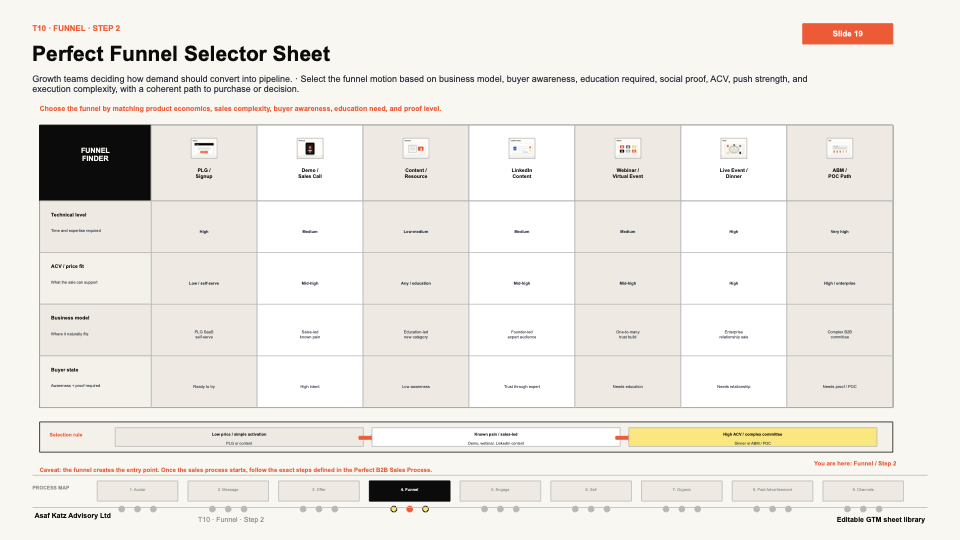
Event-led pipeline. Host a live webinar around the exact problem your ICP is actively wrestling with. Invite 400 to 800 named ICP accounts. Follow up with the highest-intent attendees within 48 hours. Across hundreds of campaigns I have run, event invites get accepted 40 to 50 percent of the time. Pitch outreach to the same lists, with the same senders, gets 5 to 10 percent. The ask is the variable, not the list.
Signal-based outbound. Identify accounts showing active buying signals: job postings, tech stack changes, funding events. Reach out with hyper-relevant context. This produces three to five times higher conversion than generic cold outreach. At RSA, one person with no booth and no brand booked 38 C-level meetings from 1,266 prospects using 12-word openers and role-matched senders. The signal was the conference itself. Everything else followed from that.
Warm network activation. Reach out to former customers, partners, and professional contacts for referrals and introductions to target accounts. The fastest meetings come from existing trust.
The honest summary: if you need pipeline this quarter, lead with events and signals. If you are building for next year, add content and brand. The programs that compound best combine both layers. Events and outbound for short-term pipeline, content and community for long-term authority. But neither layer earns the right to scale until the foundation is strong: clear avatar, sharp message, credible offer.