The AI Demand Gen Problem in 2026
Every B2B software company claims AI now. Nearly every enterprise software pitch includes "AI-powered" in the first paragraph. For AI companies, this creates a real paradox: the thing that differentiates you is the thing buyers have been trained to disbelieve.
The AI companies building real pipeline in 2026 are not winning by claiming AI harder. They are winning by demonstrating it in context, earning peer credibility through live events, and targeting buyers who are actively evaluating solutions rather than broadcasting undifferentiated claims to the full market.
79% of B2B buyers now use AI-driven search tools to research vendors. Your buyers are using AI to evaluate you. Generic content, vague outcome claims, and marketing-heavy product overviews get filtered before they reach the decision-maker.
I have watched this dynamic kill campaigns that looked fine on paper. The problem is almost never the channel. It is the foundation: a message built for the vendor's ego, not the buyer's problem.
Who the AI Buyer Is in 2026
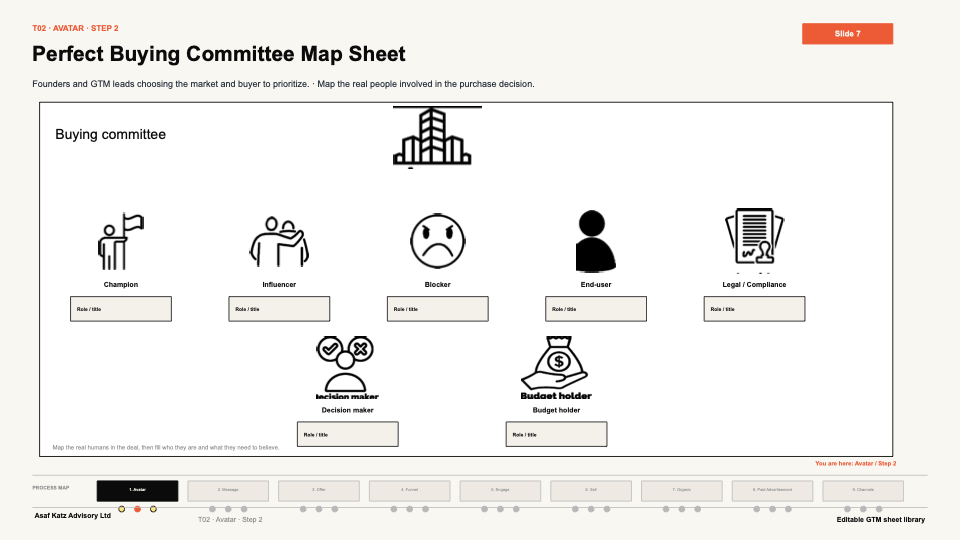
Enterprise AI buying committees typically include four stakeholders, and you need to reach all of them.
CTO / VP Engineering. Technical evaluator and often economic sponsor. Cares about model performance, infrastructure cost, integration complexity, and reliability at scale.
Head of AI or Data Science. Technical champion. Evaluates model quality, API flexibility, fine-tuning options, and benchmark credibility.
Chief Information Security Officer. Risk gatekeeper. Evaluates data handling, model governance, compliance, and vendor security posture. In regulated industries, this person can kill any deal quietly and late.
CFO / Head of Finance. Budget approver. Translates technical capability into business ROI and evaluates total cost of ownership.
Demand gen programs that reach only one of these roles rarely convert. The programs that work engage multiple stakeholders at the same time.
When I rebuilt Kovrr's enterprise story around the buyer's problem first, they closed 9 enterprise deals in one quarter. They had needed 4 to hit their fundraising quota. The shift was not a new channel. It was buying committee coverage with the right message for each role.
What Actually Works for AI Company Demand Generation
Live events with technical depth.
A practitioner-led webinar on a specific deployment challenge, whether LLM latency optimization, AI governance frameworks, or RAG architecture trade-offs, draws technical buyers who are in an active evaluation cycle. Vague thought leadership does not.
Topic selection is the multiplier. One AI-regulation webinar I ran pulled 754 signups in 26 days, over 100 from target accounts, zero ad spend, and generated $180K in pipeline. The subject was something buyers already wanted to discuss, led by a voice they already trusted. That combination is not repeatable by accident. It requires knowing your buyer's active problems before you pick a topic.
Event invites, in my experience across hundreds of campaigns, get accepted 40 to 50 percent of the time. Pitch outreach to the same lists gets 5 to 10 percent. Same people, same senders. The ask is the only variable.
GEO-optimized technical content.
Content structured to answer specific technical and strategic questions, with real data, cited sources, and concrete examples, gets retrieved by ChatGPT and Perplexity. It positions you as the credible answer before outbound ever starts. Generic blog posts do not survive this filter.
Conference presence with pre and post pipeline motion.
AI conferences are high-density concentrations of your target buyers. The meeting pipeline gets built before the conference, not at it. Targeted outreach to verified attendee and speaker profiles, role-matched senders, and short openers. At RSA, I booked 38 C-level meetings for one client from 1,266 prospects using 12-word openers and role-matched senders. No booth, no brand, just relevance.
Signal-based outreach.
Monitor which accounts are hiring AI engineers, which companies mentioned AI governance in recent earnings calls, which organizations published AI policy documents. These signals indicate active in-market buying committees. Outreach tied to something a prospect already cares about opens at roughly double the rate of cold generic sequences.
From My Own Work
The demand gen mistake I see most often in AI companies is scaling before the foundation is solid. A strong event motion, a sharp outreach sequence, even a good product demo: all of these amplify whatever message you put into them. If the message is wrong, more volume produces more noise, not more pipeline. I rebuilt my own agency after watching this pattern firsthand. I had 20 clients and lost all of them. The diagnosis: I was selling execution when they needed foundation. Every AI company I work with now goes through message and ICP validation before anything scales.
The Three Metrics That Matter for AI Demand Generation
Pipeline generated per event. Not registrations. Pipeline. How many qualified meetings did the event produce within 30 days?
Account penetration rate. What percentage of your 100 highest-priority target accounts engaged with at least one event or content piece in the quarter?
Buying committee coverage. How many of your target accounts had more than one stakeholder engage with your program? Multi-stakeholder accounts close at significantly higher rates. Single-stakeholder pipeline is fragile.
Track these three numbers. If pipeline per event is low but registrations are high, the problem is topic selection or follow-up. If account penetration is low, the problem is targeting. If buying committee coverage is low, the problem is message breadth. Each metric points to a different fix.